
Graduate & Undergraduate Opportunities
The Psychology, Law, and Culture Lab will relocate to Simon Fraser University in January 2026, where Dr. Nijdam-Jones will join the Department of Psychology as a clinical forensic faculty member. Our research will continue to focus on identity-aware, culturally safe, and community-engaged forensic psychology by expanding partnerships, conducting clinical decision-making studies, and undertaking multi-site evaluations that address language, culture, and intersecting identities in forensic contexts.
Dr. Nijdam-Jones will be accepting a graduate student at SFU for Fall 2026.

Lab Methodology & Training Philosophy
Our lab uses quantitative, qualitative, and community-based participatory methods to study forensic assessment measures, consumer-centred outcomes, and cross-cultural issues in forensic psychology. Many of our projects are co-developed with Indigenous communities, lived-experience collaborators, and interdisciplinary partners.
We are grounded in the Scientist–Practitioner–Advocate (SPA) model (Mallinckrodt et al., 2014), which integrates scientific inquiry, clinical practice, and social advocacy. Students learn to conduct rigorous, evidence-based research, apply findings in forensic contexts, and use their expertise to promote equity and systemic change. This model emphasizes reflexivity, collaboration, and accountability to the communities our work serves.
Lab Life
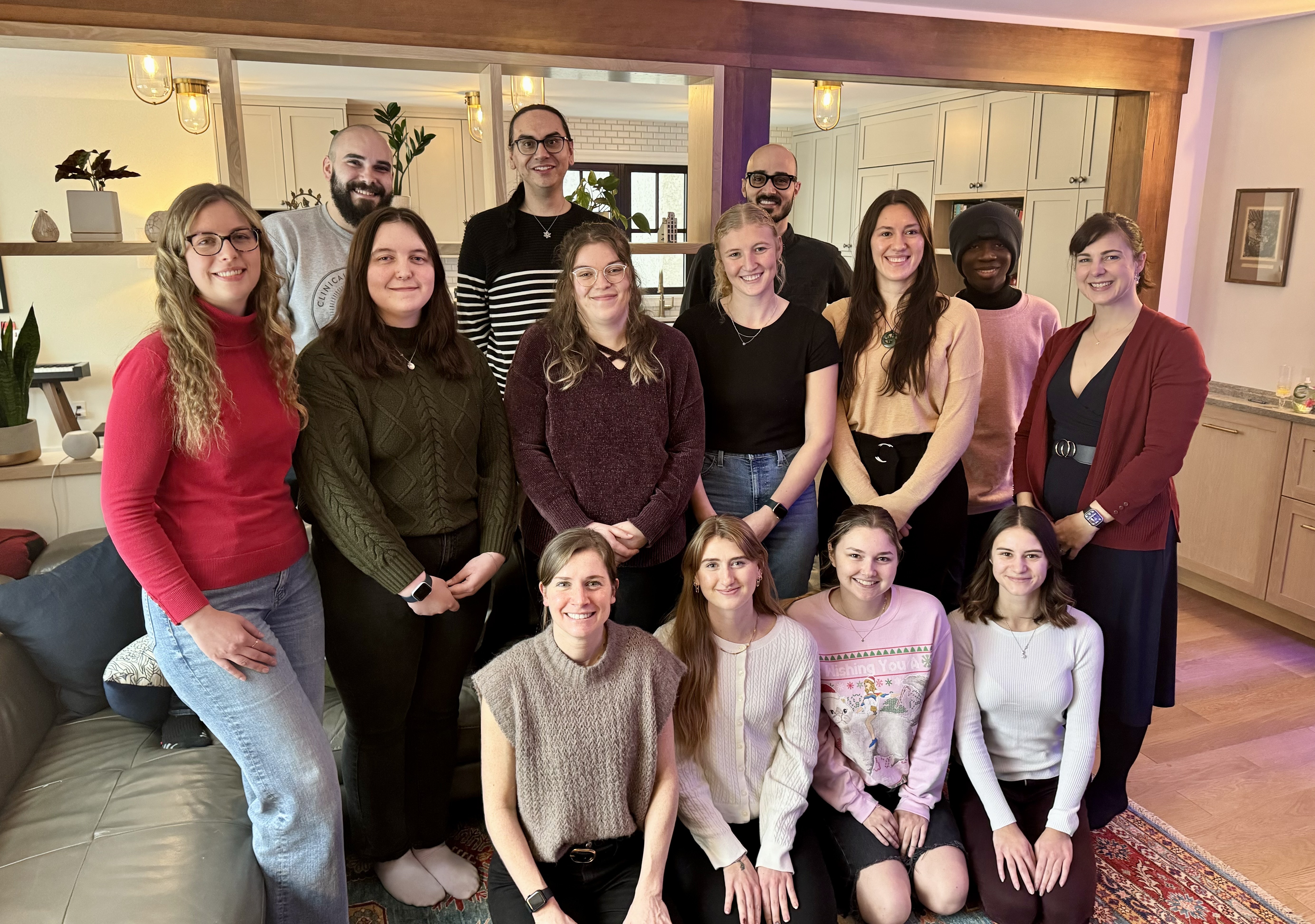
We are a collaborative, research-active group that:
- Supports both independent projects and contributions to larger multi-site or partnered studies.
- Encourages conference presentations and peer-reviewed publications.
- Meets weekly for individual supervision and lab discussions.

Graduate Students
Graduate students lead many of our core projects and receive individualized mentorship while taking on leadership roles. Their work directly informs policy, practice, and training in forensic mental health.
Research areas include:
- Culturally safe, Indigenous-partnered research in forensic mental health.
- Cross-cultural validity of forensic measures, including violence risk and malingering.
- Influence of language, culture, and intersecting identities on forensic decision-making in court, review board, and clinical contexts.
- Consumer-centred evaluation of forensic mental health services.
Graduate trainees present nationally and internationally, publish in leading journals, and engage with policymakers, service providers, and communities.
Undergraduate Students
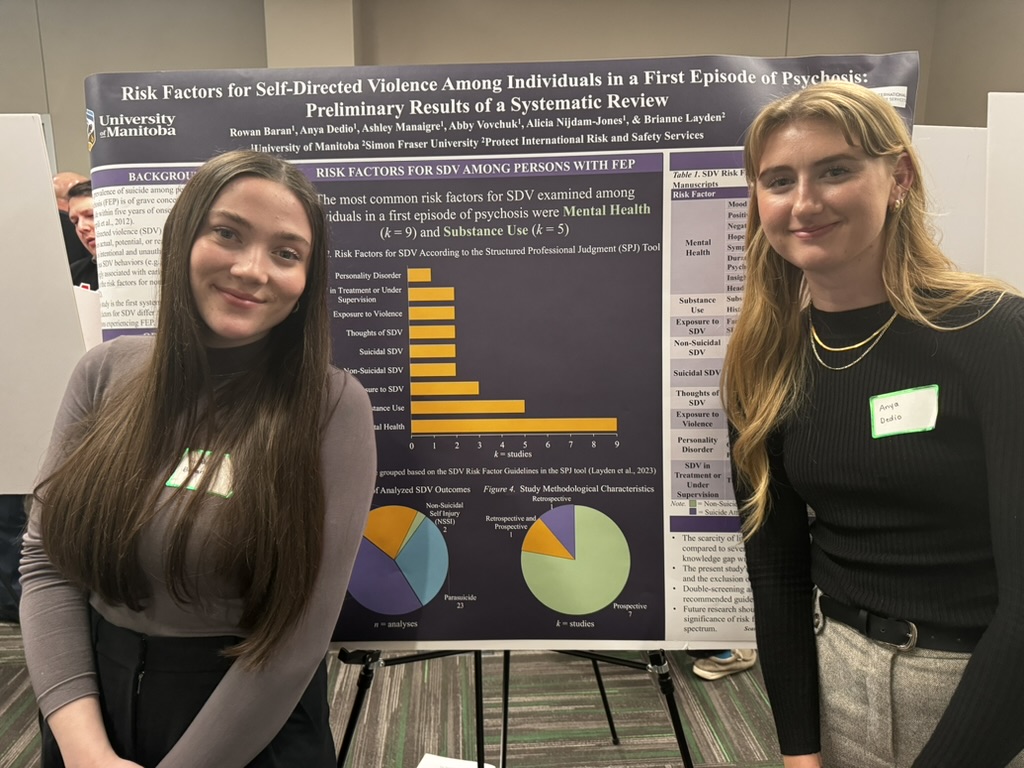
Undergraduate and volunteer researchers contribute to every stage of our work—from literature reviews and recruitment to qualitative coding, quantitative analysis, and knowledge translation. Many complete honours theses or directed studies; others gain applied experience that prepares them for graduate school or professional roles in psychology, law, and criminology.
Skill development includes:
- Conducting systematic, scoping, and narrative literature reviews.
- Managing and analyzing mixed-methods datasets.
- Supporting community-engaged, culturally responsive research.
- Preparing conference materials and plain-language summaries.
We accept volunteers and honours students starting in September and January each year. Honours students are typically recruited a year in advance and must have at least one year of lab experience before applying for thesis supervision. Volunteers are asked to commit 6–8 hours per week for a minimum of 12 months.
Please note that thesis supervision is not guaranteed and depends on alignment with current research, demonstrated progress, and available mentorship capacity.
If you are interested in joining the lab, please fill out the application form.
 PLC Lab