
Training in the PLC Lab
The Psychology, Law, and Culture Lab is based in the Department of Psychology at Simon Fraser University. Our research focuses on forensic assessment and mental health services, with particular attention to culture, language, identity, and equity in forensic contexts.
Dr. Nijdam-Jones anticipates accepting one graduate student at Simon Fraser University through the Fall 2026 application cycle (for September 2027 admission), either in the Clinical Psychology program (Forensic emphasis) or the Psychology and Law program, depending on the applicant and program fit.
If you are interested in graduate study with Dr. Nijdam-Jones, please see our Graduate School Resources page before getting in touch.
Interested in Joining the Lab?
Undergraduate students: Please review the information below and then fill out the application form.
Prospective graduate students: If you are planning to apply to graduate school with me in the upcoming application cycle, please do not apply to volunteer in the lab. Volunteer positions are intended to provide meaningful research training rather than serve as a route to graduate admission.

Research & Training
Our lab uses quantitative, qualitative, and community-based participatory methods to study forensic assessment measures, consumer-centred outcomes, and cross-cultural issues in forensic psychology. Many of our projects are developed in collaboration with Indigenous communities, people with lived experience, clinicians, service providers, and interdisciplinary research partners.
We are grounded in the Scientist–Practitioner–Advocate (SPA) model (Mallinckrodt et al., 2014), which integrates scientific inquiry, clinical practice, and social advocacy. Students learn to conduct rigorous, evidence-based research, apply findings in forensic contexts, and use their expertise to promote equity and systemic change. This model emphasizes reflexivity, collaboration, and accountability to the communities our work serves.
The PLC Lab is both a workplace and a training environment. I have high expectations for the work we produce, but I don’t expect students to come in knowing how to do everything. Students take on more independence as they develop, with support and mentorship along the way. Learning how to do the work is part of the point.
Supervision & Lab Life
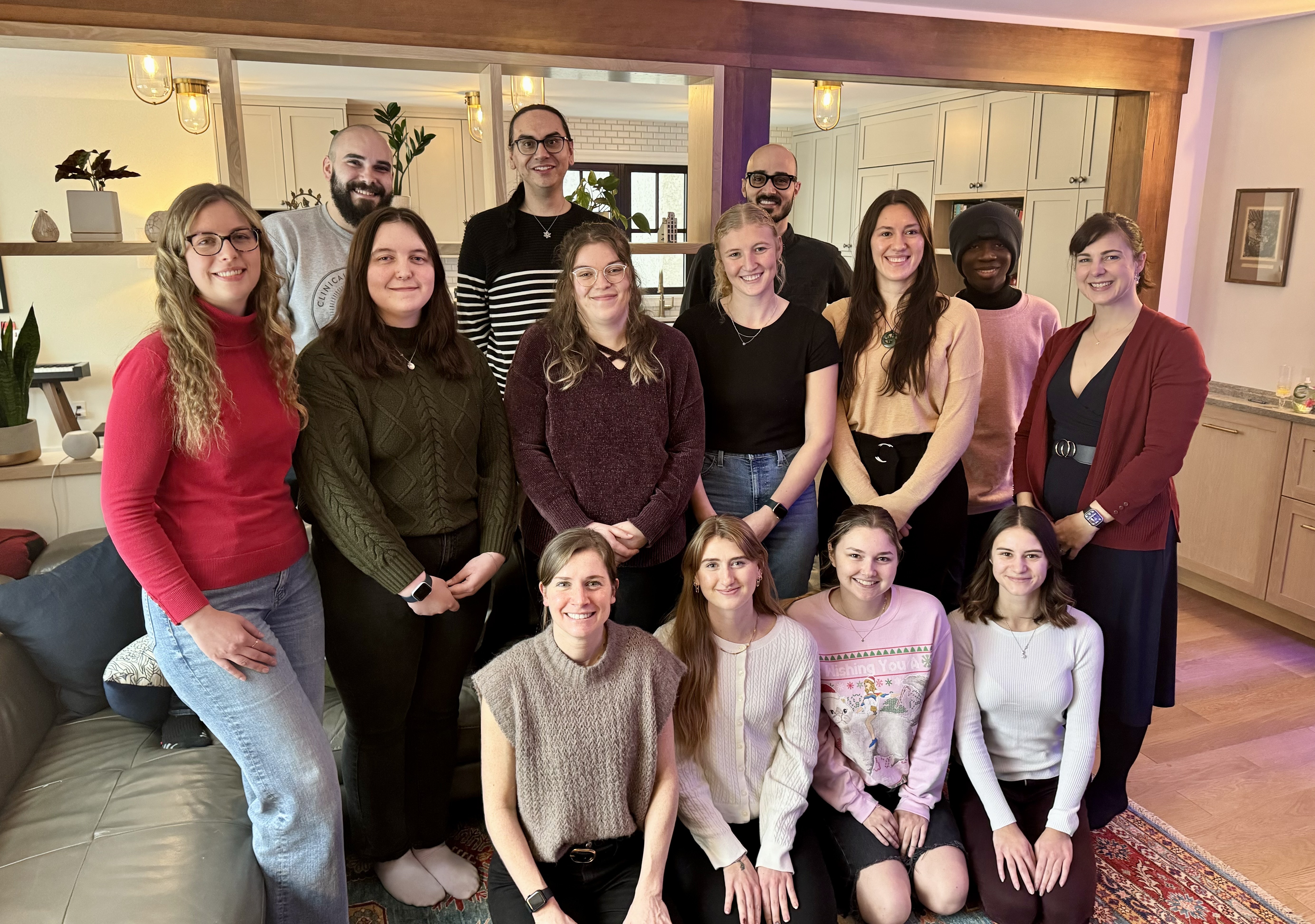
I am fairly hands-on as a supervisor, particularly when students are learning something new, with the expectation that they become more independent over time. Graduate and honours students typically meet with me individually every week or two (respectively), in addition to weekly lab meetings.
I provide a lot of feedback on writing, research, presentations, grants, and professional development. I also expect students to come prepared, take ownership of their work, ask questions, follow through on commitments, and tell me when something isn’t working.
I invest a lot in my students and tend to match the energy they bring to their training.
The lab itself is collaborative rather than competitive. We share opportunities, read each other’s work, help with each other’s projects, and celebrate each other’s successes. We take our work seriously, but people also have lives outside the lab. I don’t expect responses to emails or messages during evenings, weekends, holidays, or vacations.

Graduate Students
Graduate students lead their own research while also contributing to larger lab and collaborative projects. Students are encouraged to develop their own research interests and identities within the broader areas of the lab’s work.
Graduate training is research-intensive. Students should expect to:
- Develop and lead independent research;
- Contribute to collaborative and partnered projects;
- Present at national and international conferences;
- Work toward peer-reviewed publications; and
- Mentor and work alongside other lab members.
I also encourage students to pursue grants, collaborations, clinical experiences, and other opportunities that fit their individual career goals.
Current research areas include:
- Culturally safe, Indigenous-partnered research in forensic mental health
- Cross-cultural validity of forensic assessment measures, including violence risk and malingering
- Language, culture, and intersecting identities in forensic assessment and decision-making
- Consumer-centred evaluation of forensic mental health services
Undergraduate Students
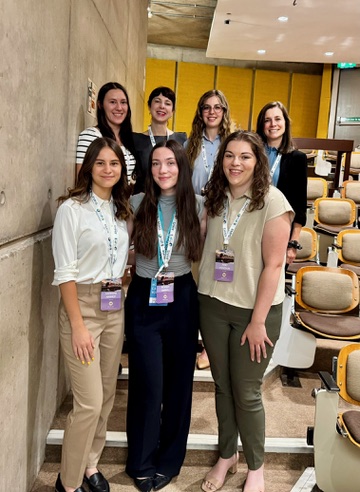
Undergraduate students are involved in the research process and may contribute to literature reviews, recruitment, data collection, qualitative coding, quantitative analysis, conference presentations, and knowledge translation. As students gain experience, they may take on more responsibility, contribute to presentations and manuscripts, mentor newer students, or complete directed studies or honours projects.
We accept volunteers starting in September and January. Volunteers are asked to commit 6–8 hours per week for a minimum of 12 months.
Honours Students
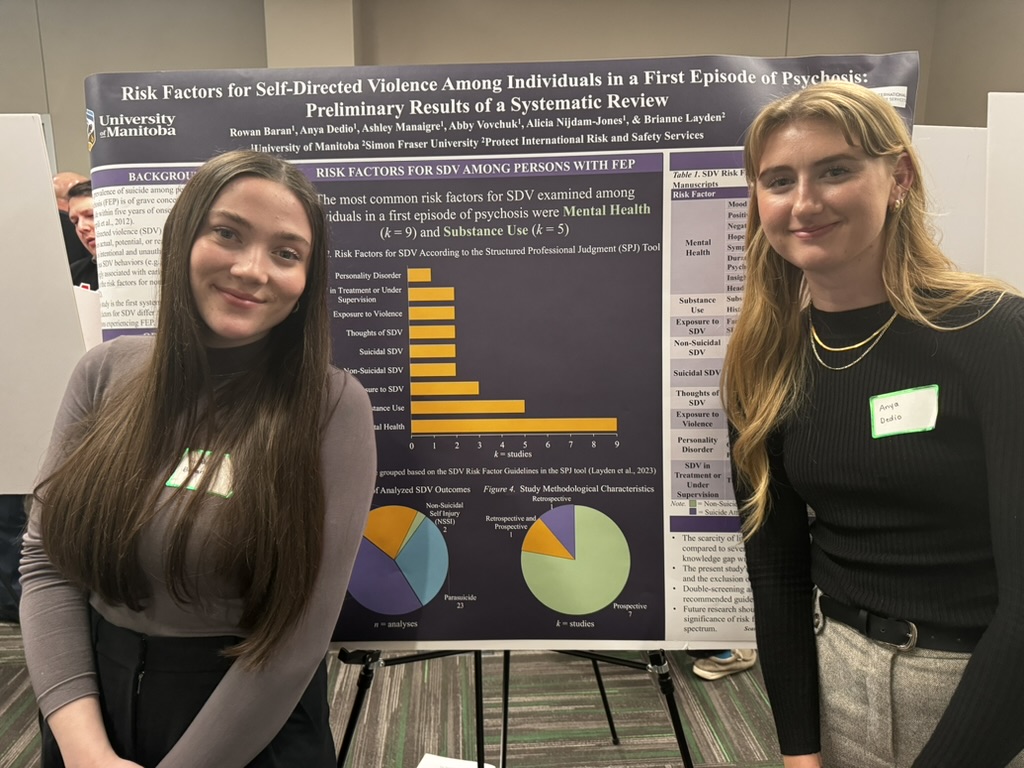
Honours students are typically recruited about a year in advance and are expected to have at least one year of experience in the lab before beginning a thesis with me. This gives students time to develop research skills and gives both of us a chance to determine whether working together on a thesis is a good fit.
Please note that thesis supervision is not guaranteed and depends on alignment with current research, demonstrated progress, and available mentorship capacity.

